The Ghost in the Stone: Why Angkor Isn’t the End of the Road
I stepped off the local sleeper train in Hospet, the air smelling of parched earth and diesel fumes, just as the sun began to bleed orange over a landscape that looked less like Earth and more like a terraformed Mars. My shirt was already sticking to my back—April in the tropics doesn’t negotiate—but as the rickshaw rounded the bend into Hampi, the heat vanished from my mind.
Before me sat a city of boulders, some the size of apartment blocks, balanced precariously over 14th-century granite temples that stretched as far as the hazy horizon. I’ve spent weeks navigating the sunrise scrums at Angkor Wat, fighting for a reflection shot in a lily pond while a tour group’s megaphone blared behind me. But here? It was just me, a wandering cow, and the echoes of a fallen empire.
By April 2026, the "Angkor Fatigue" will be real. If you want the spiritual weight of antiquity without the theme-park atmosphere, you need to look elsewhere. Here are the seven sites that, in my professional opinion, leave Angkor in the dust.
---
1. The Monolithic Miracle: Kailasa Temple (Ellora), India
If Angkor Wat is a symphony of bricks, the Kailasa Temple at Ellora is a solo performance of impossible genius. Unlike Angkor, which was built from the ground up, Kailasa was carved top-down from a single basalt cliffside.
Why it beats Angkor: It is the largest monolithic structure in the world. Engineers estimate that 200,000 tons of rock were removed to reveal this multi-story cathedral, complete with life-sized elephants and intricate friezes of the Ramayana. In April, the Deccan plateau is hot, but the stone interiors of the caves remain eerily cool, smelling of ancient damp and burnt camphor.
- Pro-Tip: Don't just walk through the entrance. Take the steep, unofficial path to the top of the cliff overlooking the temple. Seeing the entire complex from above allows you to grasp the sheer impossibility of its 8th-century construction.
2. The Jungle Pyramid: Koh Ker, Cambodia
Only two hours from Siem Reap, yet worlds away in spirit, Koh Ker was the capital of the Khmer Empire for a brief, rebellious stint in the 10th century. The centerpiece, Prasat Thom, is a seven-tiered sandstone pyramid that looks more like something from the Mayan Yucatan than Southeast Asia.
Why it beats Angkor: Atmosphere. While Angkor is manicured, Koh Ker is still being reclaimed by the forest. Large ficus roots strangle the smaller shrines, and the silence is heavy. By April 2026, the new road infrastructure will make it accessible, but it remains a fraction as crowded as the main park.
- Pro-Tip: Climb the modern wooden staircase to the top of Prasat Thom just before 4 PM. The view over the Cambodian jungle canopy is unbroken by any modern buildings, a rarity in 2026.
3. The Martian Empire: Hampi, India
Hampi is the remains of the Vijayanagara Empire, and it is vast—over 4,100 hectares of ruins. It’s not just one temple; it’s an entire civilization frozen in a landscape of volcanic boulders and neon-green banana plantations.
Why it beats Angkor: The geological setting. The way the Virupaksha Temple’s gopuram rises against the jagged rocks is a visual feast that Angkor’s flat plains can’t match. In April, the Tungabhadra River is low, revealing hidden lingams carved directly into the riverbed rocks.
- Pro-Tip: Rent a moped. The site is too large to walk in the April heat. Cross the river to the "Hippie Island" side (Anegundi) for the best sunset views of the main temple complex.
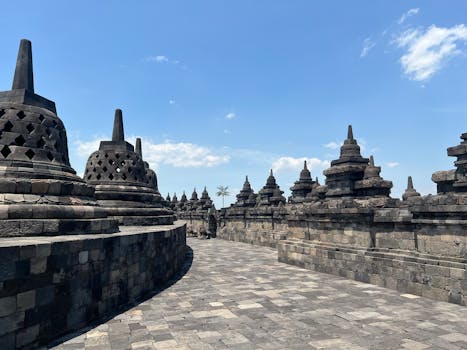
4. The Stairway to Nirvana: Borobudur, Indonesia
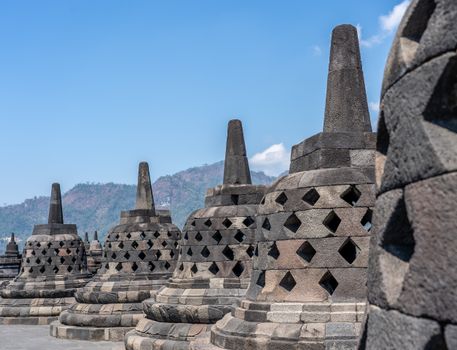
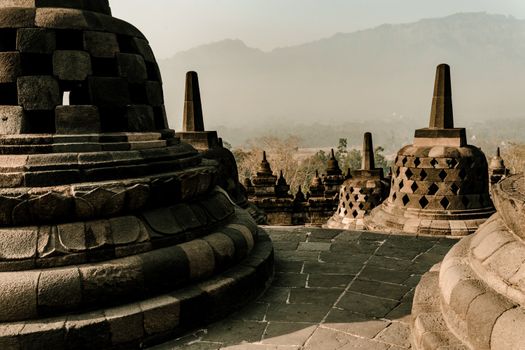
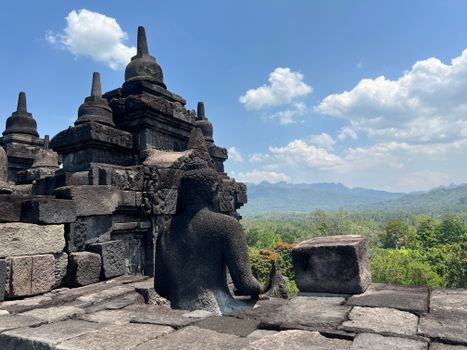
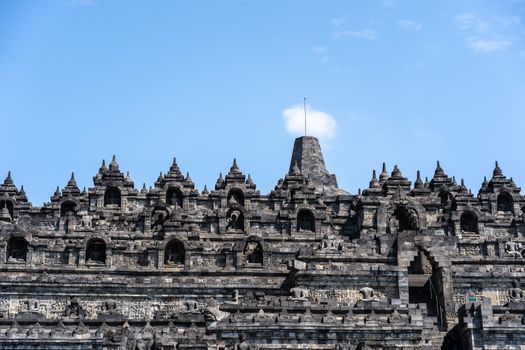
Located in Central Java, Borobudur is the world’s largest Buddhist temple. Built in the 9th century, it is shaped like a giant tantric mandala.
Why it beats Angkor: The narrative journey. As you ascend the nine platforms, you follow a literal path to enlightenment, passing 2,672 relief panels and 504 Buddha statues. The precision of the bell-shaped stupas against the backdrop of the Merapi volcano is arguably the most cinematic sight in Asia.
- Pro-Tip: The "Sunrise Tour" is the cliché for a reason, but for 2026, I recommend the blue hour (just before dawn). The mist settles in the Kedu Plain, making the temple look like it’s floating on a cloud.
5. The Giants’ Sanctuary: Baalbek, Lebanon
If you want scale that makes you feel like an ant, go to Baalbek. This is home to the Temple of Jupiter, featuring some of the largest stone blocks ever quarried—some weighing over 800 tons.
Why it beats Angkor: The sheer verticality. The six remaining columns of the Jupiter temple are 20 meters high. The nearby Temple of Bacchus is better preserved than the Parthenon. While Angkor is delicate and sprawling, Baalbek is brutal, Roman, and massive.
- Pro-Tip: April is the "Goldilocks" month for Lebanon—the snow is still on the Lebanon Mountains in the distance, but the Bekaa Valley is blooming with wildflowers. It’s the perfect temperature for exploring these unshaded ruins.
6. The City of 2,000 Pagodas: Bagan, Myanmar
Note: Check local travel advisories for 2026. Bagan is a 26-square-mile plain covered in over 2,200 Buddhist temples and pagodas.
Why it beats Angkor: The sheer density. At Angkor, the temples are separated by forest. In Bagan, they are everywhere you look. Watching the sunrise as hot air balloons drift over thousands of terracotta spires is a spiritual experience that transcends traditional tourism.
- Insider Language: Don't just stick to the "Big Four" (Ananda, Dhammayangyi, etc.). Find a "key holder" for one of the smaller, unnamed stupas to see 11th-century mural paintings that haven't been touched by restoration teams.
7. The Monolithic Caves of Ajanta, India
While Ellora is about architecture, Ajanta is about art. These 30 rock-cut Buddhist cave monuments date back to the 2nd century BCE.
Why it beats Angkor: The preservation of color. The frescoes inside Ajanta are the finest surviving examples of ancient Indian art. The way the light hits the pigments—made from lapis lazuli and malachite—after 2,000 years is nothing short of a miracle.
- Pro-Tip: Bring a small, high-powered flashlight (though be careful with flash photography). The site’s lighting is intentionally dim to preserve the paintings, and you’ll want to see the detail in the "Padmapani" Bodhisattva.
---
Quick Facts: Logistics & Budget for April 2026
| Destination | Est. Daily Cost (USD) | Best Way to Get There | April Weather | | :--- | :--- | :--- | :--- | | Hampi, India | $30 - $70 | Train from Bangalore or Goa | Hot & Dry (35°C) | | Borobudur, Indo | $80 - $150 | Flight to Yogyakarta (YIA) | Humid/Lush (30°C) | | Baalbek, Lebanon| $60 - $120 | Private car from Beirut | Perfect (22°C) | | Koh Ker, Cambodia| $50 - $100 | Taxi/Remork from Siem Reap | Very Hot (37°C) | | Ellora, India | $40 - $80 | Flight to Aurangabad | Dry Heat (36°C) |
---
The Verdict: Why April 2026?
April is a month of transition. In Southeast Asia, it’s the peak of the heat before the monsoon, which keeps the "casual" tourists at bay. In India, it’s the tail end of the festival season. By choosing these alternatives, you aren't just seeing ruins; you're witnessing the endurance of human ego and faith in its most raw forms.
Angkor Wat is a masterpiece, yes. But in 2026, the real magic lies in the places where the jungle still whispers and the stones still hold their secrets tightly.
---