I stepped off the dusty local bus in Maharashtra, India, squinting against the harsh Deccan sun. The air smelled of dry earth, diesel fumes, and sweet cardamom chai brewing at a nearby roadside stall. I walked past the standard tourist kiosks, rounded a massive basalt cliff face, and stopped dead in my tracks.
Looking down into a 100-foot-deep chasm, I saw a multi-story cathedral carved entirely out of a single mountain. No joints, no mortar, no bricks. Just one giant rock, sculpted from the top down with staggering precision. In that instant, my memories of fighting the selfie-stick crowds at Angkor Wat faded into insignificance.
While Angkor Wat rightfully earns its place in history books, it has become a victim of its own success. The magic of sunrise at Angkor is often diluted by thousands of glowing smartphone screens. But what if I told you there are ancient holy sites that offer more architectural audacity, deeper spiritual energy, and a fraction of the crowds?
Here is the definitive guide to the temples more impressive than Angkor Wat travel advisors suggest you visit instead.
---
1. The Monolithic Miracle: Kailasa Temple (Ellora Caves, India)
If you want to witness an engineering feat that defies modern comprehension, you must go to Cave 16 of the Ellora Caves in Maharashtra, India.
The Architecture of the Impossible
Kailasa Temple is not built; it is excavated. In the 8th century, Rashtrakuta builders carved this massive Hindu temple dedicated to Lord Shiva out of a single volcanic basalt cliffside. Working from top to bottom, ancient sculptors removed over 200,000 tons of rock using only chisels, hammers, and picks.
The result is a double-story temple complex twice the size of the Parthenon in Athens, covered in intricate three-dimensional reliefs of deities, elephants, and scenes from the Ramayana.
- The Vibe: Mind-bending awe. Standing in the courtyard, looking up at the sheer rock walls from which this temple was birthed, makes you question the technological limits of ancient civilizations.
- Pro-Tip: Do not just walk through the temple. Take the steep, unmarked dirt path to the left of the cave entrance. It leads to the top of the cliff, allowing you to look down into the excavation pit. This perspective is the only way to truly grasp the scale of this monolithic masterpiece.
---
2. The Golden Plain of Mysticism: Bagan (Myanmar)
While Angkor Wat is a singular, massive complex, Bagan is an entire landscape transformed by devotion. Spread across a 26-square-mile bend in the Irrawaddy River sit more than 2,200 Buddhist temples, pagodas, and monasteries dating from the 9th to 13th centuries.
A Horizon of Spires
Instead of Angkor's grey sandstone, Bagan is a sea of terracotta red, white plaster, and shimmering gold leaf. During the dry season, a fine layer of dust hangs in the air, catching the light at dawn and dusk to create a surreal, dreamlike atmosphere.
- The Vibe: Poetic and vast. It feels like stepping into a fantasy painting where temples sprout from the earth like trees.
- Pro-Tip: Skip the crowded sunrise viewpoints recommended by major tour agencies. Rent an e-bike (electric scooter) and head to the lesser-known Dhammayazika Pagoda or the small, unnamed brick mounds near the Sulamani Temple. You will likely find yourself completely alone as the morning mist burns off, listening only to the distant chime of temple bells.
---
3. The Galactic Mandala: Borobudur (Java, Indonesia)
Rising out of the lush Kedu Plain in Central Java, with the active volcano Mount Merapi looming in the distance, Borobudur is the world’s largest Buddhist temple. Built in the 9th century, it lay abandoned for centuries under layers of volcanic ash and jungle growth before its rediscovery.
Walking the Path to Enlightenment
Borobudur is designed as a giant three-dimensional mandala—a physical representation of Buddhist cosmology. To experience it properly, you must walk the temple's nine stacked platforms, starting at the base and spiraling upward.
As you ascend, you pass 2,672 exquisite bas-relief panels detailing the life of Buddha and the laws of karma, eventually emerging onto the circular top platform. Here, 72 bell-shaped stupas, each housing a seated Buddha statue, look out over a sea of palm trees and jagged volcanic peaks.
- The Vibe: Deeply meditative, serene, and cosmic.
- Pro-Tip: Book the official sunrise entry ticket through the Manohara Resort (the only way to access the temple grounds before the main gates open at 6:00 AM). Position yourself on the eastern side of the top tier. Watching the sun rise behind Mount Merapi, casting long shadows through the latticed stupas, is a spiritual experience that Angkor's crowded reflection pools simply cannot match.
---
4. The Untamed Jungle Labyrinth: Banteay Chhmar (Cambodia)
If you love the "Tomb Raider" aesthetic of Angkor's Ta Prohm but hate sharing it with tour buses, Banteay Chhmar is your holy grail. Located in northwest Cambodia, near the Thai border, this massive 12th-century temple complex remained largely inaccessible for decades due to landmines and its remote location. Today, it is safe, wild, and incredibly quiet.
The Real Indiana Jones Experience
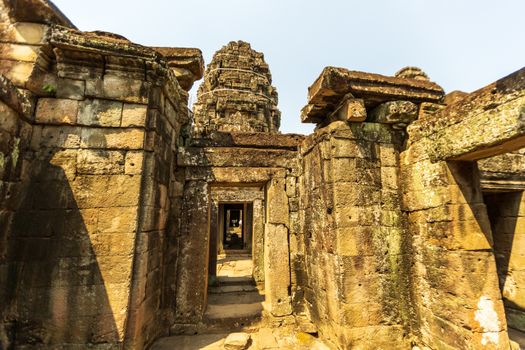
Banteay Chhmar was built by King Jayavarman VII, the same ruler behind Angkor Thom. It features the same iconic, enigmatic face-towers of Avalokiteshvara, but here, they are collapsed, covered in strangler figs, and hidden deep within the forest canopy.
You will scramble over fallen lintels, walk through dark galleries where bats roost, and discover stunning bas-reliefs of land and sea battles that remain completely unprotected by ropes or barriers.
- The Vibe: Raw, adventurous, and authentic. You are an explorer, not just a tourist.
- Pro-Tip: Hire a local community guide at the CBT (Community-Based Tourism) office near the entrance. They can show you the hidden bas-relief of the multi-armed Avalokiteshvara, which survived decades of looting and is hidden behind a collapsed stone wall.
---
5. The Gothic Spires of the East: Prambanan (Java, Indonesia)
Located just a short drive from Borobudur, Prambanan is the Hindu counterpart to its Buddhist neighbor. Built in the 10th century, it is the largest Hindu temple compound in Indonesia, characterized by its tall, pointed architecture typical of classical Hindu design.
A Symphony of Volcanic Stone
The central compound features three main towering temples dedicated to the Trimurti: Shiva, Vishnu, and Brahma. The tallest of these, the Shiva temple, rises a staggering 154 feet into the Javanese sky, featuring sharp, jagged relief carvings that look like a dark gothic cathedral made of volcanic andesite.
- The Vibe: Dramatic, imposing, and artistically intense.
- Pro-Tip: Visit Prambanan in the late afternoon. The dark stone absorbs the warm hues of the setting sun, turning a deep, burning orange. Afterward, buy a ticket to the Ramayana Ballet, performed outdoors with the illuminated spires of Prambanan serving as the live, jaw-dropping backdrop.
---
6. The Surreal Boulder-Strewn Empire: Hampi (Karnataka, India)
Hampi is not just a temple; it is the ruined capital of the Vijayanagara Empire, spread across a bizarre, alien landscape of giant, gravity-defying granite boulders. Located in Karnataka, South India, this UNESCO World Heritage site contains over 1,600 surviving ruins, including temples, royal pavilions, and ancient bazaar streets.
Where Myth Meets Stone
At the heart of Hampi is the active Virupaksha Temple, which has been a place of worship since the 7th century. But the real showstopper is the Vittala Temple, home to the famous stone chariot and the legendary "musical pillars" that emit distinct musical notes when gently tapped.
- The Vibe: Otherworldly, vast, and deeply historic. The juxtaposition of ancient stone architecture against the bright green banana plantations and massive pink boulders is visually unparalleled.
- Pro-Tip: Rent a bicycle or a coracle (a traditional circular bamboo boat) to cross the Tungabhadra River to the "hippie side" of Hampi (Anegundi). Climb up the 575 steps of Anjanadri Hill at sunset. You will watch the sun sink behind a landscape of ruins and boulders while wild monkeys play around you and temple chants echo from the valley below.
---
The Budget & Logistics: Planning Your Alternative Temple Pilgrimage
To help you plan your journey to these extraordinary sites, here is a breakdown of the key travel logistics:
| Temple & Location | Est. Entry Cost (USD) | Best Time to Visit | How to Get There | Insider Rating | | :--- | :--- | :--- | :--- | :--- | | Kailasa Temple (Ellora, India) | $8 (for foreigners) | November to February | Fly to Aurangabad, then take a 45-minute taxi or local bus. | ⭐⭐⭐⭐⭐ (5/5) | | Bagan (Myanmar) | ~$20 (Zone fee) | November to February | Fly to Mandalay, then take a 4-hour private car or bus. | ⭐⭐⭐⭐⭐ (5/5) | | Borobudur (Java, Indonesia) | $25 (Temple ground access) | May to October (Dry season) | Fly to Yogyakarta, then take a 1-hour taxi or public bus. | ⭐⭐⭐⭐☆ (4.5/5) | | Banteay Chhmar (Cambodia) | $5 | November to February | Hire a private driver from Siem Reap (approx. 2.5 hours each way). | ⭐⭐⭐⭐⭐ (5/5) | | Prambanan (Java, Indonesia) | $25 | May to October | Located 30 minutes from Yogyakarta city center via TransJogja bus or Grab. | ⭐⭐⭐⭐☆ (4/5) | | Hampi (Karnataka, India) | $8 | October to March | Take an overnight sleeper train from Bangalore or Goa to Hospet, then a short auto-rickshaw ride. | ⭐⭐⭐⭐⭐ (5/5) |
---
The Verdict: Should You Skip Angkor Wat Entirely?
No. Angkor Wat is a marvel of human achievement and deserves its fame. However, the travel industry has a habit of funneling everyone to the same handful of destinations, creating a homogenized, Disney-fied travel experience.
By seeking out these temples more impressive than Angkor Wat travel advisors suggest, you are not just escaping the crowds. You are reclaiming the sense of discovery, mystery, and raw wonder that travel is supposed to be about. Pack your bags, leave the selfie-stick behind, and go stand in the shadow of giants.
---