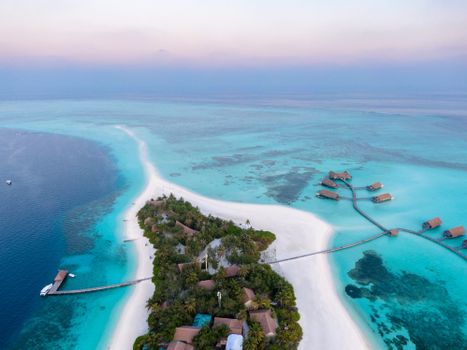
The Moment the Air Changed
I stepped off the electric catamaran and the first thing that hit me wasn't the scent of salt—it was the absence of noise. No chugging diesel engines, no hum of a distant generator. Just the rhythmic slap-slap of the turquoise Laccadive Sea against recycled timber pilings.
I was at a resort that, according to my inner circle of high-net-worth travel advisors, shouldn't technically be able to exist. It was a sprawling, five-star sanctuary that produces more energy than it consumes. As the "Barefoot Guardian" handed me a chilled glass of kombucha brewed three hundred yards away, I realized that the old definition of luxury—excess for the sake of excess—was officially dead.
The new gold standard? Carbon-neutrality that feels like an indulgence.
Travel advisors who manage the portfolios of the world’s most discerning travelers are no longer looking for gold-plated faucets. They are looking for "Regenerative Opulence." They are looking for the resorts listed below—the ones that have spent decades perfecting the science of leaving no trace while providing an unforgettable experience.
1. Soneva Fushi, Maldives: The Waste-to-Wealth Pioneer
When you ask a top-tier hospitality advisor for a carbon-neutral recommendation, Soneva Fushi is usually the first name out of their mouth. But they won't talk about the villas; they’ll talk about the "Eco-Centro."
I spent a morning there, and it’s a revelation. While other resorts hide their trash in the back, Soneva treats its waste as a resource. I watched as glass bottles were crushed and blown into bespoke art pieces at the on-site glass studio. I saw food waste transformed into nutrient-rich compost for the massive organic gardens that provide 80% of the resort’s greens.
The Insider Detail: Soneva has been carbon neutral for over a decade. They include a mandatory $10 per night carbon offset fee, which funds the Soneva Foundation. This isn't a "pay to play" scheme; it has planted over 500,000 trees in Thailand and provided fuel-efficient cookstoves to thousands of families in Myanmar and Darfur.
Pro-Tip: Ask for a tour of the solar farm at 10 AM. It’s one of the largest in the Maldives, and the engineering behind the battery storage system is a masterclass in off-grid survival.
2. Kasiiya Papagayo, Costa Rica: The "No-Nail" Philosophy
In the Guanacaste jungle, Kasiiya Papagayo is the resort that advisors suggest for clients who want to disappear. The architecture here is "low-impact" in the most literal sense. The entire resort was built without a single ounce of concrete.
The five suites are perched on timber platforms, held together by tension. If the resort were dismantled tomorrow, the land would return to its original state within weeks. During my stay, the "luxury" wasn't in the high-thread-count linens (though those were present); it was in the way the tented suites allowed the scent of the dry tropical forest—earthy, spicy, and wild—to permeate the room.
The Insider Detail: The resort is 100% solar-powered. To maintain carbon neutrality, they use electric 4x4s for all guest transport and have a strict "no-plastic" policy that extends even to the supply chain of their local vendors.
Pro-Tip: The "hidden" sunset spot is a rocky outcrop just past Suite 5. Bring the binoculars provided in your room; the whale sightings here are legendary and entirely undisturbed by motorized boat traffic.
3. Singita Kwitonda Lodge, Rwanda: Conservation as Currency
High-end advisors suggest Singita Kwitonda not just for the gorilla trekking, but for its role in reforestation. Located on the edge of Volcanoes National Park, the lodge was built using bricks fired in local kilns and volcanic rock found on-site.
The air here smells of eucalyptus and woodsmoke. It is crisp, thin, and invigorating. Singita’s commitment to carbon neutrality is baked into their "One Planet" framework. They’ve established a massive buffer zone between the local community and the park, planting over 250,000 indigenous trees to expand the gorillas' habitat.
The Insider Detail: The lodge’s vegetable garden, the "Akarabo," is a circular masterpiece of permaculture. The chefs don't just cook "farm-to-table"; they cook "steps-to-table."
Pro-Tip: Don't skip the "Gear Room." Instead of buying new trekking gear that you’ll never wear again (a carbon-heavy habit), the lodge provides high-quality, sanitized, pre-owned gear for all guests.
4. Kachi Lodge, Bolivia: Solar Domes on the Salt Flats
For the traveler who has seen everything, advisors point to the Salar de Uyuni. At Kachi Lodge, you stay in transparent geodesic domes that look like a space station on the moon.
The environmental challenge of operating on a salt flat is immense. Kachi Lodge solved this by being entirely mobile and 100% solar-powered. They use a sophisticated closed-loop water system that ensures not a single drop of greywater touches the pristine salt crust.
The Insider Detail: The heating in the domes is powered by a unique solar-thermal system. Even when the temperature outside drops to -10°C, the interior remains a cozy 20°C, all without burning a liter of propane.
Pro-Tip: The star-gazing here is the best on Earth. Use the on-site telescope at 2 AM; the lack of light pollution and the high altitude (3,600m) make the Milky Way look like a solid object.
5. Svart, Norway: The World’s First "Powerhouse" Hotel
While many resorts are "carbon neutral," Svart (opening soon, but already the talk of every elite travel summit) aims to be carbon positive. Located at the foot of the Svartisen glacier, this ring-shaped architectural marvel is designed to produce more energy than it uses over its lifetime—including the energy used to build it.
Advisors are already waitlisting clients for this one. It sits on wooden poles over the Holandsfjorden fjord, minimizing its footprint on the seabed. The design utilizes solar energy harvested from the roof and geothermal wells for heating.
The Insider Detail: Svart will operate its own carbon-neutral shuttle boats and aims to be completely off-grid within five years of opening.
Pro-Tip: Book a room on the western arc of the circle for the best views of the Northern Lights, which are visible directly from your bed through the floor-to-ceiling triple-glazed windows.
The Advisor’s Secret: How to Spot "Greenwashing"
Not every resort that claims to be "eco" is actually carbon-neutral. I asked a leading hospitality consultant how they vet these properties for their A-list clients. Here are the three red flags they look for:
- The "Towel Card" Trap: If a resort’s only sustainability initiative is asking you to reuse your towels, they aren't carbon neutral. They’re just saving on laundry costs.
- Lack of Data: A truly carbon-neutral resort will have a sustainability report available. They should be able to tell you exactly how many kilowatt-hours their solar array produced last month.
- Imported "Eco" Goods: If a resort serves "organic" avocados that were flown in from 4,000 miles away, their carbon footprint is massive. Look for hyper-local sourcing.
Quick Facts: Planning Your Eco-Luxe Escape
| Resort | Location | Best Time to Visit | Est. Cost (Per Night) | How to Get There | | :--- | :--- | :--- | :--- | :--- | | Soneva Fushi | Maldives | Nov – April | $2,500+ | Seaplane from Malé | | Kasiiya Papagayo | Costa Rica | Dec – May | $1,800+ | 4x4 Transfer from LIR | | Singita Kwitonda | Rwanda | June – Sept | $3,500+ | 3-hour drive from Kigali | | Kachi Lodge | Bolivia | May – Oct | $2,200+ | Flight to Uyuni + 4x4 | | Svart | Norway | Sept – March | TBA | Boat from Bodø |
The Final Word
Carbon-neutral travel isn't about sacrifice. It’s about a deeper connection to the destination. When you stay at a resort that respects its environment, the service is more intentional, the food tastes more vibrant, and the sleep... well, the sleep is better when you know your presence isn't costing the earth.
As the industry shifts, these resorts aren't just leading the way—they are redefining what it means to be a world-class traveler.
---