Eating with the hands is one of the oldest ways of sharing food, and it remains central to many culinary traditions. In these meals, bread, rice, leaves or other edible utensils take the place of forks and spoons, and the act of eating becomes communal. For travelers, dining this way can be a memorable introduction to local culture. It can also feel unfamiliar, and customs about which hand to use, how to share and what to do with serving dishes differ between places. This guide describes some well-known hand-eating traditions, the etiquette that often applies and how to order and eat with confidence.
Bread as a utensil
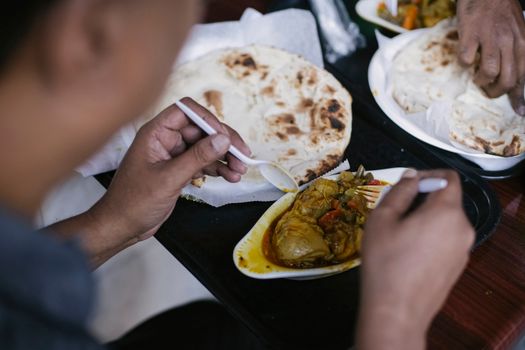
Several cuisines use bread to scoop, wrap and carry food. In Ethiopia and Eritrea, injera, a sourdough flatbread, is laid on a large platter and topped with stews and vegetables. Diners tear off pieces with the right hand and use them to pick up portions of food. Meals are typically shared from the same platter, and the communal style is part of the experience. In parts of North Africa and the Middle East, flatbreads serve a similar purpose, with diners tearing and scooping dips, salads and stews.
Bread-based hand eating is usually social, so expect to share and to take only what you can comfortably eat. Some restaurants bring extra bread as you finish, so it is fine to ask for more.
Rice and curry meals
Rice eaten by hand is common across South and Southeast Asia. In South India, meals are often served on a banana leaf, with rice, lentils, vegetables, pickles and yoghurt arranged in sections. Diners mix small amounts of rice with curries and sides using the fingertips of the right hand. In Sri Lanka and parts of Malaysia, rice and curry meals may also be eaten by hand, depending on the setting. In the Philippines, a communal style known as kamayan involves rice and dishes spread over banana leaves on a table, with diners eating together without plates or cutlery.
Hygiene practices are part of these traditions. Diners usually wash their hands before and after the meal, and many restaurants provide water bowls or handwashing facilities at the table. Follow the example of others and ask staff if you are unsure.
Etiquette and customs
Most hand-eating cultures share a few common rules. Use the right hand for eating, since the left hand is often associated with personal hygiene in many contexts. Keep your fingers clean, and avoid touching serving dishes with your fingers unless the meal is clearly communal. Wait until the host or the most senior guest begins before eating, where this custom applies. In shared meals, take food from the part of the platter nearest you and pass dishes in the direction the staff or host indicates.
Practice matters. Learn the technique by watching others, and do not worry if you struggle at first. Many restaurants welcome visitors and will show you how to mix rice with sauces or tear bread neatly.
Ordering and what to expect
Restaurants serving hand-eaten food often offer set platters or family-style meals that are easier for visitors to order. Ask what is included, whether there is a vegetarian option and how the platter is shared. Portion sizes can be large, so order gradually if you are unsure. Some places provide cutlery on request, and that is an acceptable choice if you feel uncomfortable.
Check ingredients and allergy information, since shared platters and cooking methods can mean that different foods touch. If you have dietary requirements, speak to staff before ordering.
Finding authentic places
Look for restaurants that serve the cuisine to local diners and that explain their dishes clearly. Local recommendations, community food forums and well-established neighbourhoods with strong communities are useful starting points. Be cautious of places that promise an experience purely for tourists without clear culinary roots. A good restaurant will be proud to explain the origin of its dishes and the way they are traditionally eaten.
Practical tips
- Wash your hands before the meal and use the right hand for eating.
- Watch how others eat, and follow their lead on sharing and serving.
- Ask for cutlery if you prefer, which is generally acceptable.
- Order a set platter or family-style meal if you are unsure what to choose.
- Check allergy and ingredient information before ordering shared dishes.
- Take your time, enjoy the company and ask questions about the food.
Common mistakes to avoid
A common mistake is assuming that the hand-eaten part of a meal replaces all sauces or sides, when the balance across the platter is often intentional. Some visitors eat only the rice or bread and leave the accompaniments, missing the contrast the meal was designed around. Others try to mix everything together at once, which can make the textures hard to enjoy. Another mistake is expecting a short, fast meal, when many hand-eaten platters are meant to be savoured over time. Visitors sometimes avoid speaking with staff, when a simple question about how a dish is eaten can make the experience richer. Finally, some people stop eating as soon as a dish looks unfamiliar, rather than trying a small portion first. Thinking about pace and portion size makes the meal more comfortable.
A simple checklist
- Have you checked whether the restaurant is busy with local diners at your chosen time?
- Do you know which dishes are meant to be shared, and which are individual?
- Is the order sized realistically for the number of people at the table?
- Do you know how the bill is handled for shared platters?
- Are you willing to try one unfamiliar dish before ordering more?
Frequently asked questions
Is it acceptable to eat only the rice or bread? In most settings it is, although sharing a range of dishes is often appreciated when eating communally.
Do you need to speak the local language? Not necessarily. Pointing, simple phrases and a polite smile are often enough, and staff can explain the dishes.
Are these restaurants suitable for children? Often, since platters are sociable. Ask about spice levels and whether there are milder options.
Eating with the hands connects diners to food in a direct, communal way. It rewards curiosity, patience and a willingness to learn from the people who have shared these meals for generations. By following local customs and choosing restaurants that present their traditions honestly, you can enjoy a meal that is both delicious and meaningful.